

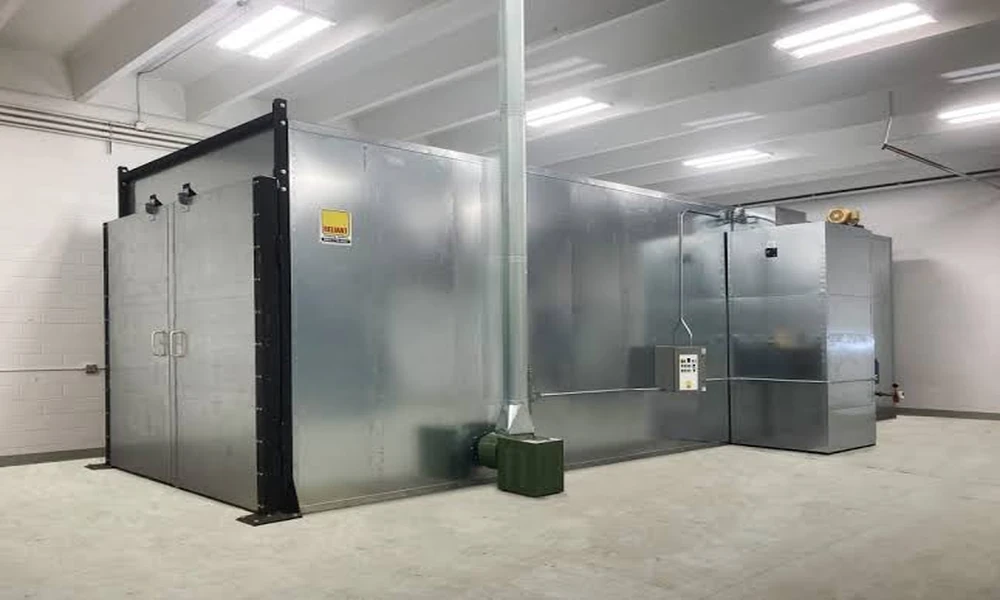
Growth can expose weak spots in a finishing shop faster than almost anything else. A booth from one source, an oven from another, and controls added later may work for a while, but mismatched equipment often creates delays, heat issues, layout problems, and support confusion. Reliant powder coating systems give shops a more coordinated path by connecting major equipment pieces into a setup built to work as one production line.
Unified Designs Ensure Your Booth, Washer, and Oven Cycle Times Match Perfectly
Production flow depends on timing. If the washer finishes parts faster than the booth can handle them, or the booth outpaces the curing oven, carts begin stacking up and crews lose rhythm. Powder coating equipment works best when each stage supports the next instead of forcing employees to wait, rush, or rearrange work throughout the day. Matched cycle times also help improve consistency. Parts move through cleaning, coating, curing, cooling, and inspection with fewer interruptions. A Reliant powder coating equipment package can help shops plan capacity from the start so the booth, washer, and oven support the same workload.
Pre-engineered Lines Eliminate the Hidden Costs of Custom Component Bridging
Piecemeal setups often look cheaper at first because each machine is purchased separately. Trouble appears when the shop needs extra ductwork, modified carts, revised electrical work, special transitions, added controls, or layout changes just to make everything connect. Those small changes can become expensive after installation begins. Pre-engineered systems reduce guesswork because major equipment relationships are considered before the line reaches the floor. Dimensions, airflow, heating capacity, part movement, and utility needs can be reviewed as one plan. Shops comparing Reliant powder coating equipment for sale often benefit from seeing how the full system fits together before committing to separate components.
Single-source Engineering Guarantees All Controls Communicate Without Glitches
Controls can become a frustration when equipment comes from different manufacturers. One panel may manage booth airflow, another may control the washer, and a separate setup may operate the oven. If those systems do not communicate smoothly, operators may deal with timing errors, shutdowns, alarms, or inconsistent operating conditions.
Unified engineering makes training and troubleshooting easier. Operators can better understand how the line functions when controls follow a consistent design. Reliant powder coating equipment helps reduce the confusion that can happen when several unrelated control systems are forced into one production process.
Complete Systems Bypass the Headache of Managing Multiple Equipment Warranties
Warranty issues can become complicated when one part of the line affects another. A booth supplier may blame the oven, an oven supplier may point to airflow, and a controls provider may claim the issue began somewhere else. That back-and-forth wastes time when production needs a clear answer.
Complete systems create a simpler support path. Shops know who to call when performance questions come up, and the equipment history stays easier to track. This matters for busy operations that cannot afford long delays while multiple vendors sort out responsibility.
Standardized Layouts Reduce the Footprint Compared to Mismatched Machinery
Floor space carries real value in a finishing shop. Oversized gaps, awkward machine placement, poor cart paths, and unnecessary clearance areas can reduce the room available for staging, masking, inspection, and packaging. Mismatched machinery may force a layout that works around equipment instead of supporting production.
Standardized layouts help improve the use of available space. Reliant powder coating systems can be planned around part size, workflow, operator movement, and future production needs. Better layout planning can make a shop feel larger without adding square footage.
Balanced Airflow Across Integrated Units Prevents Dust Cross-contamination
Powder control depends heavily on airflow. Poor booth balance, careless equipment placement, or weak separation between work areas can allow powder dust to move where it does not belong. Cross-contamination can affect finish quality, create cleanup problems, and increase the risk of rejects.
Integrated planning helps maintain cleaner separation between coating, curing, and staging areas. Air movement, exhaust requirements, booth design, and oven placement all influence shop cleanliness. Reliant powder coating ovens and booths can be selected together so airflow supports the coating process rather than working against it.
One Dedicated Support Team Resolves Performance Issues Across the Entire Line
Performance problems do not always come from one machine. Poor curing may involve oven settings, part loading, line speed, part thickness, airflow, or cleaning quality. A support team that understands the full system can look at the entire process instead of focusing on one piece of equipment.
Broader support also helps shops improve over time. As production increases or part types change, the line may need adjustments in loading, timing, or operating procedures. A single knowledgeable support source can help identify practical changes without treating each machine as a separate problem.
Factory-matched Components Ensure Predictable Energy Draws and Utility Hookups
Utility planning becomes easier when equipment is selected as a coordinated system. Electrical loads, gas requirements, exhaust needs, compressed air, and floor space can be reviewed before installation instead of discovered during setup. A Reliant industrial powder coating oven, booth, and related equipment should fit the shop’s available utilities as closely as possible.
Reliant Finishing Systems gives coating operations a practical way to avoid the hidden complications that come from building a line one unrelated machine at a time. Through Reliant powder coating systems, complete equipment packages, ovens, booths, washers, controls, and support resources, shops can plan a cleaner, better-matched finishing operation with fewer surprises during installation and daily production.