

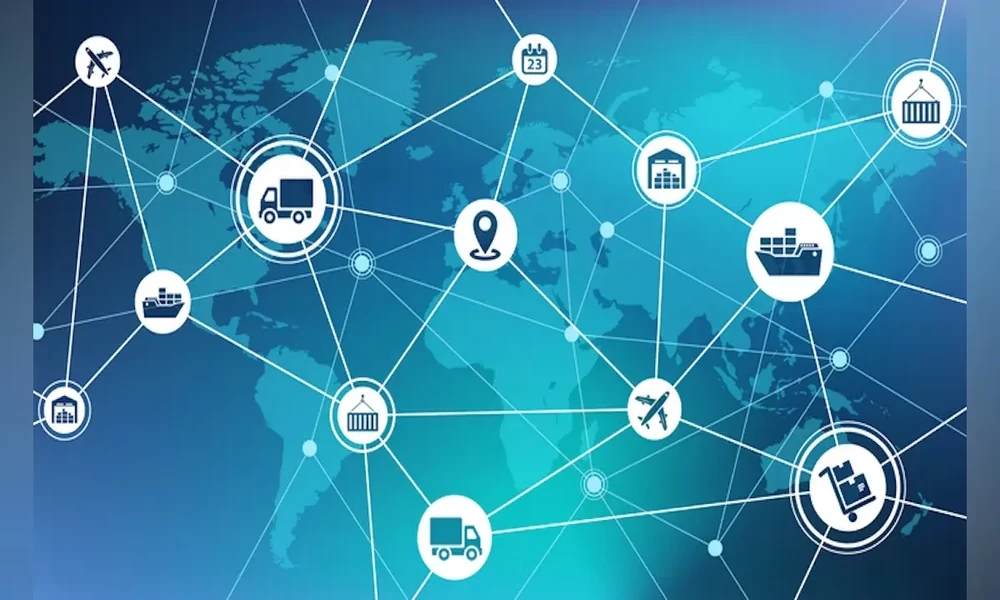
Products do not get to customer by accident. It might involve suppliers, manufacturers, warehouses, transport companies, and distribution centers before it even reaches the doorstep.
These connections basically form a supply chain network. Properly planned, they enable businesses to move product more smoothly, control expenses, and adjust in response to the inevitable shift in market demand.
Think Beyond a Single Supplier
A supply chain consists of more than a simple straight line.
A single manufacturer may depend on multiple suppliers. Those suppliers may draw materials from disparate regions. The finished product can then travel through multiple warehouses before arriving to consumers.
Being connected like this, gives a supply chain network more flexibility than just a supplier to customer model.
If one supplier is delayed, another source might sometimes keep production moving.
The Five Key Connections
Typically, a strong network will have multiple elements that come together.
Suppliers
Suppliers supply raw materials or component parts, packaging, or finished goods. Production can directly depend on their reliability.
Manufacturers
Manufacturers convert raw materials or components into finished goods. Also, production capacity and quality control can manage this stage.
Warehouses
Warehouses carry stock until products are required. They affect storage costs and delivery duration based on location.
Transport Providers
The inter-point transport is achieved through road, rail, air, and sea transport. Of course, it depends on cost, distance, urgency, and product type.
Customers
At that time, the starting point is customer. Their purchase behavior is very informative; it can guide stock and distribution decisions.
Why Location Matters?
You could have the best suppliers in the world and still struggle to deliver if your network is poorly located.
Take, for example, the decision to store all inventory in one remote warehouse that results in longer shipping times for regional customers.
Delivery speed may sometimes be better with multiple facilities. But with more locations come increased management and storage costs.
Let’s define balance.
Where Technology Fits In
An accurate information is crucial for a modern supply chain network.
An inventory & logistics software can ensure the organizations tracking of:
- Stock levels
- Supplier orders
- Shipment locations
- Warehouse activity
- Customer demand
A clearer view allows managers to identify issues sooner and make educated decisions.
Efficiency is About More Than Speed
Speed alone does not mean efficiency in an operation, and this is important too, although there is a virtue in moving product faster.
Cost, the current inventory levels with respect to demand, supplier performance metrics, warehouse storage, movement capacities, as well as customer expectations from their preferred sellers all need to be accounted for in business design as well.
A good supply chain network is able to combine these elements. This allows businesses to choose which locations their products should come from, where they would be spread, and how the customer will obtain it.
Creating a Network that is Dynamic
Supply chains are not static for all time. Over a period of time the demand changes, suppliers go out of business, or expand their horizons and businesses enter new market places.
Routine evaluations can uncover vulnerabilities and emerging possibilities.
If structured, informed, and planned well-enough the supply chain network can help businesses become reliable without adding to the expense. The outcome is an enhanced supply chain that is more responsive to normal demand, as well as supplementary shocks.