

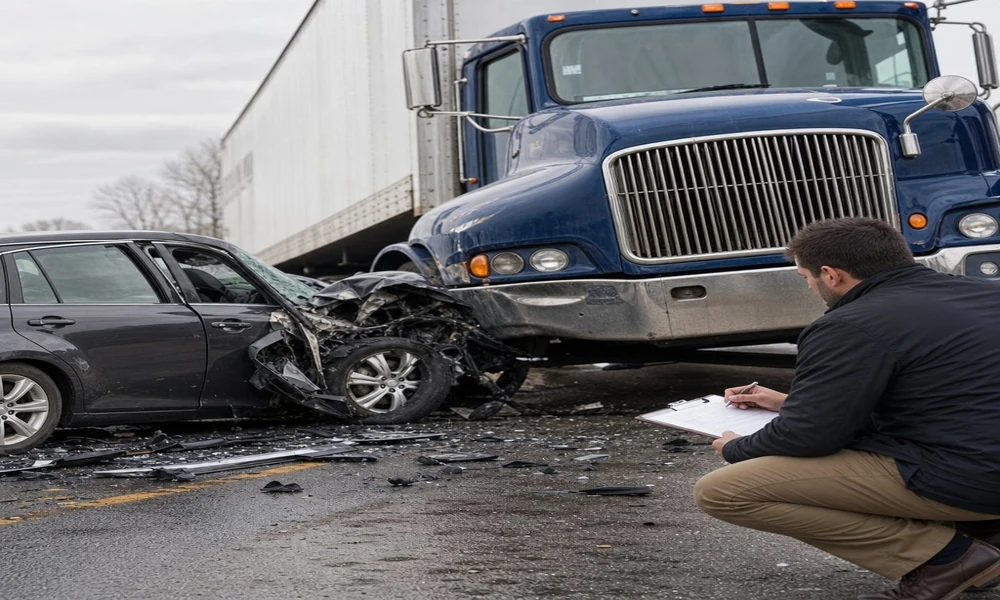
The person in front slows down as they see the crossing lights turn on and hear the bells ring before the gate starts to come down. Behind them is a truck and you can see the grille of it in the rearview mirror. The actual crash might only take a fraction of a second, but the investigation of such a claim requires a lot of looking back at things like brake lights, motion of the wheels, time of the lights and where the vehicles are in relation to each other.
10 seconds to go: Warning lights come on
Investigators will look at the railroad crossing’s signal logs first to determine the time the lights came on, when the bell rang and the time the gate arms went down. It can be significant if there is a difference of 2 seconds when you consider how much longer it takes, and there is a good rundown at https://reuters.com/world, a big truck to stop than a car.
Dashcam video may be a good source to establish this timeline. It may be able to show the time the first warning lights appeared, the reflection of the red light on the car’s hood or how fast the truck was going by seeing where it was as it crossed a painted line on the road. Sometimes a nearby security camera can help verify the timeline, but it might not be helpful if there is a telephone pole, dirty lens or delivery van blocking out some of the video.
7 seconds left: How far did the driver see?
The next question is what could each driver have seen? Investigators will look at the view from the car driver’s seat as well as the truck’s cab. Visibility can be impacted by trees, signal boxes, traffic and even sunlight coming through a dusty windshield.
Driver visibility near an Arlington Heights railroad crossing
It may be necessary to measure distances to get a better picture of this:
- Distance from where the lights are first visible to the stop line
- Distance from the truck’s bumper to the car’s license plate
- Skid marks, drag marks and dirt pushed up onto the road near the tracks
- Road grade and whether weather or debris played a role
Photos taken by phone shortly after the accident can also help show things like a bent gate arm, pieces of plastic from the car’s tail lights or tire marks before they are washed away by the street sweepers.
4 seconds left: How far apart were they?
This is usually where the case gets narrowed down. The truck driver may argue the car suddenly stopped, while the car driver will say the car was forced to stop when the gates began coming down. Dashcam video that shows the brake lights were already on before the car stopped can be used to refute the sudden stop claim.
The distance between the vehicles is also something investigators look at closely. A fully loaded truck behaves differently than an empty trailer. Maintenance records may show worn brake pads, an air pressure alert, mismatched tires or other maintenance done on the truck right next to an oil-stained fingerprint. The engine data recorder may be able to show the truck’s speed, acceleration and braking before the crash.
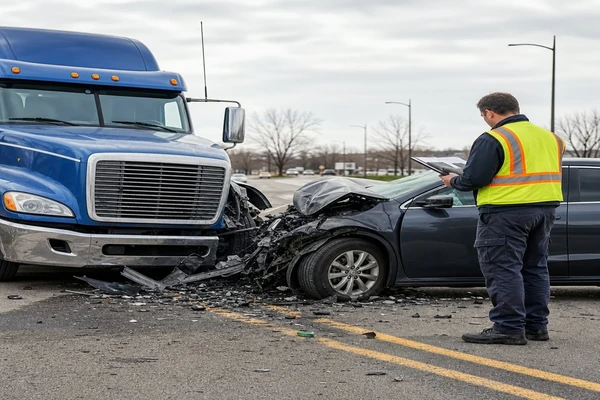
Investigators measuring the distance between a truck and car
2 seconds left: Who is responsible?
There could be multiple people involved in the claim. The truck driver is one of them, but the trucking company’s maintenance, load, and training records may also be factors. Defective brake parts or improperly secured loads can make this a complex case.
The car driver’s conduct could also affect his claim. If it is shown the car stopped well before the marked line, the brake lights weren’t working or the car changed lanes close to the tracks, the car driver may have some share of the blame. Bending of a car’s bumper, a few seconds missing from the dashcam or a burned-out tail light bulb that still has the filament in it could all be used to argue fault. Settlements are negotiated most of the time but disputed claims can go further.
After the crash: Damages
The 10 seconds before the accident help show liability, but the days and weeks after help show damages. Documents like medical bills may show whiplash, injuries to the wrist from holding onto the steering wheel or a headache that started later that night. Receipts for towing, car repairs, missed work and prescriptions can help track these losses.
Insurance claims involving commercial carriers can be complicated with many layers of coverage and requests for recorded statements. Getting video, vehicle data, signal records and the truck itself saved as soon as possible can ensure that vital evidence is not deleted or destroyed during a routine repair.
Why it’s important to look at the 10 seconds
To learn how truck accident cases work in Arlington Heights, look at the situation after the accident in reverse order: crumpled car trunk, locked wheels, cars getting closer together and crossing lights flashing. This short amount of time can tell you why the car stopped, whether the truck had enough room and what injuries were caused (click this link here now) by the accident.