Why Love Handles Won’t Disappear: The Alpha-2 Receptor Problem
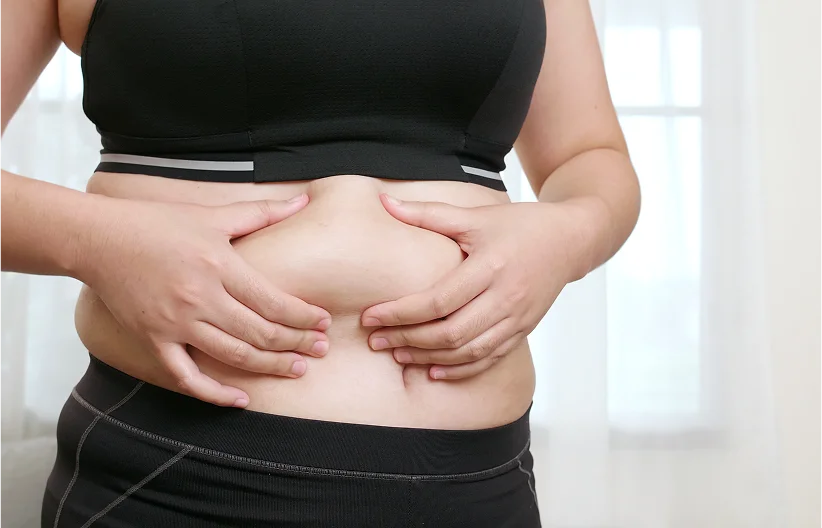
You’ve lost weight everywhere else. Your face looks leaner, your arms show more definition, even your legs have trimmed down noticeably. Yet those love handles remain stubbornly present, clinging to your sides like they’re contractually obligated to stay there forever. This isn’t a failure of willpower or dedication—it’s a biological reality that most fitness advice completely ignores.
Understanding how to get rid of love handles requires diving into cellular biology, specifically the receptor patterns that make certain fat deposits extraordinarily resistant to mobilization. Your love handles aren’t just “the last fat to go”—they’re biologically programmed to resist fat loss through sophisticated mechanisms that actively block fat breakdown.
The Receptor Imbalance: Your Body’s Built-In Brake System
Every fat cell in your body contains receptors that respond to hormones and determine whether that cell will release stored fat or hold onto it. Think of these receptors as switches: beta-adrenergic receptors are the “go” switches that promote fat release when activated by hormones like adrenaline, while alpha-2 adrenergic receptors are “stop” switches that actively block fat breakdown.
Here’s the brutal reality: the fat cells in your love handles contain approximately 10-15 times more alpha-2 receptors compared to beta receptors. For comparison, easier-to-lose fat areas like your face or arms might have a 1:1 or even favorable ratio of beta to alpha-2 receptors. Your love handles are literally equipped with ten brake pedals for every gas pedal.
This isn’t hyperbole—research confirms that abdominal adipocytes (fat cells) have approximately three times more alpha-2 receptors than fat cells in the thighs or arms. When you factor in the specific distribution patterns around the obliques and lower back where love handles form, the imbalance becomes even more pronounced.
The Antilipolytic Environment
When alpha-2 receptors dominate a fat deposit, they create what’s called an antilipolytic environment—a cellular state that actively prevents lipolysis (fat breakdown). When catecholamines like adrenaline and norepinephrine circulate through your bloodstream during exercise or fasting, they bind to receptors on fat cells. In areas with balanced or beta-dominant receptor patterns, this binding triggers a cascade that activates hormone-sensitive lipase (HSL), the enzyme responsible for breaking down stored triglycerides into free fatty acids that can be burned for energy.
In your love handles, however, those same catecholamines preferentially bind to the overabundant alpha-2 receptors, which send the opposite signal. They suppress HSL activity, reduce cyclic AMP (the messenger molecule that promotes fat breakdown), and essentially lock the fat inside the cells. You can be exercising intensely, flooding your system with adrenaline, and your love handles will still refuse to release their stored fat because the receptor pattern is working against you.
Studies show that even modest alpha-2 receptor activation can suppress HSL activity by 35-50%. When you’re dealing with a 10:1 receptor imbalance, you’re fighting against overwhelming biological resistance.
The Blood Flow Bottleneck
The alpha-2 receptor problem compounds through another mechanism: these receptors don’t just block fat breakdown—they also cause vasoconstriction, narrowing the blood vessels that serve the fat tissue. This creates a vicious cycle that makes love handles even more resistant to mobilization.
Research demonstrates that stubborn fat areas have 40-60% fewer blood vessels compared to non-stubborn deposits. Even when you manage to activate some lipolysis and free fatty acids begin to be released from the cells, poor blood flow prevents those fatty acids from being efficiently transported away to be burned. They essentially get stuck in the local area and often get re-deposited right back into the same fat cells.
Think of it this way: even if Amazon (your fat-burning hormones) manages to convince residents (your fat cells) to ship packages (free fatty acids), nothing goes anywhere because the roads (blood vessels) are inadequate and constantly congested. The infrastructure simply can’t support fat mobilization from that area.
Insulin’s Role in Preserving Love Handles
The receptor imbalance problem is dramatically worsened by insulin’s effects on fat tissue. Insulin doesn’t just promote fat storage—it actively enhances alpha-2 receptor activity while simultaneously suppressing HSL independently of the receptor system. This creates a double-lock on your love handles.
When insulin levels are elevated (which happens after eating, particularly carbohydrate-rich meals), your love handles enter a state where fat mobilization becomes nearly impossible. The alpha-2 receptors are more responsive to any circulating catecholamines, HSL is directly suppressed by insulin’s signaling, and blood flow to the area is reduced. Even if you exercise during this window, you’ll be burning glucose and glycogen while your love handles remain completely untouched.
This explains why frequent eating patterns, even with controlled portions, often fail to address love handles. By maintaining elevated insulin throughout the day through regular meals, you never create the extended low-insulin windows necessary to override the alpha-2 receptor dominance in stubborn fat areas.
The Cortisol Connection
Chronic stress adds another layer to the love handle problem. Cortisol, your primary stress hormone, has a complex relationship with abdominal fat storage. Fat cells around your midsection—including love handles—contain approximately four times more cortisol receptors than subcutaneous fat elsewhere on your body.
When cortisol is chronically elevated due to psychological stress, inadequate sleep, or aggressive dieting, it promotes both increased fat storage in the love handle region and further resistance to fat mobilization. Cortisol also impairs insulin sensitivity, which often leads to compensatory increases in insulin levels—creating exactly the hormonal environment that protects love handles.
The cruel irony is that aggressive approaches to fat loss—severe restriction, excessive training volume, inadequate recovery—generate significant stress that elevates cortisol. You end up creating a hormonal environment that makes your love handles more resistant even as you’re working harder to eliminate them.
Why Traditional Approaches Fail
Most conventional fat loss advice focuses on creating an energy deficit through reduced eating and increased activity. While this can certainly reduce overall body fat, it doesn’t address the specific biological barriers that make love handles resistant. You can diet yourself down to very low body fat levels and still have disproportionately persistent love handles because the receptor pattern and blood flow issues aren’t being targeted.
Side bends, oblique exercises, and targeted “love handle workouts” similarly miss the mark. You cannot spot-reduce fat through exercise of the underlying muscles. The metabolic demands of those exercises occur systemically—you’ll burn fuel from wherever your body finds it easiest to mobilize, which definitely isn’t your alpha-2 dominant love handles.
Strategies That Address the Root Cause
Effectively reducing love handles requires strategies that specifically target the alpha-2 receptor problem and blood flow limitations. This means creating conditions that maximize catecholamine release while minimizing alpha-2 receptor activity, improving regional blood flow to stubborn areas, and optimizing the hormonal environment to favor fat mobilization.
Strategic meal timing that extends periods of low insulin creates windows where alpha-2 receptor activity is reduced and HSL can function more effectively. Research shows that during fasted states, particularly extended fasts beyond 12-14 hours, the suppressive effect of alpha-2 receptors diminishes significantly. This doesn’t mean eating less—it means being strategic about when you eat to maximize fat-burning windows.
High-intensity training that produces significant catecholamine release can help overcome alpha-2 receptor resistance, particularly when performed during low-insulin states. The massive surge of adrenaline and norepinephrine from intense effort can override some of the alpha-2 suppression through sheer concentration of fat-mobilizing hormones.
Interventions that improve blood flow to stubborn areas—including heat application, massage, specific movement patterns, and certain compounds like L-citrulline—can help address the vascular bottleneck. Studies show that combining these blood flow enhancements with exercise can increase local lipolysis by 15-25% compared to exercise alone.
The Long Game
Perhaps the most important thing to understand about love handles is that they require patience and the right strategy, not just more effort. The receptor patterns and blood flow limitations that make them resistant won’t change overnight. However, research demonstrates that consistent application of targeted strategies can actually modify receptor expression over time—reducing alpha-2 receptor density while upregulating beta receptors.
This adaptation typically takes 8-16 weeks of consistent effort, but it represents a fundamental change in how that tissue responds to fat-mobilizing signals. You’re not just shrinking the fat cells—you’re improving the biological machinery that determines whether they can release their contents.
Your love handles aren’t there because you’re doing something wrong. They’re there because of sophisticated biological mechanisms that evolved to protect those fat stores. Understanding these mechanisms—the alpha-2 receptor dominance, the blood flow limitations, the hormonal interactions—provides the roadmap for finally addressing them effectively.